Apartments & Houses for rent in S. Carlo (Val Bavona)

No homes in S. Carlo (Val Bavona)
More listings in the S. Carlo (Val Bavona) area
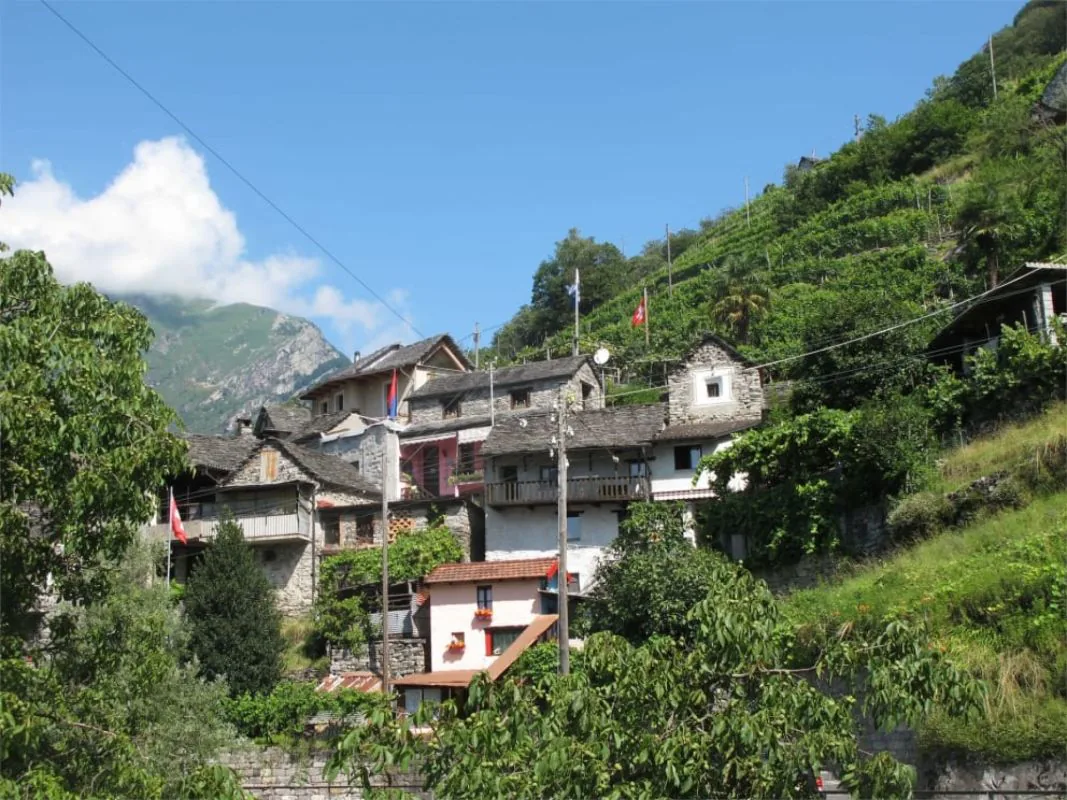
Housing market in S. Carlo (Val Bavona)
The following figures are for the whole municipality S. Carlo (Val Bavona) belongs to. The vacancy rate is 0.97%, 46% below the cantonal average (1.78 %) — a tight rental market. The municipal tax multiplier (Steuerfuss) is 94% (2026), 13% above the average of the canton's municipalities (82.9 %). A single person without children on a gross wage of CHF 100'000 pays CHF 12'791 a year in canton, municipality and personal tax in the municipality of Cevio (tax year 2026, without church, federal and wealth tax). On the mean of the municipalities weighted by residents it is CHF 12'063 in the canton and CHF 12'251 in Switzerland. Median taxable income of all taxpayers is CHF 35'700 (tax period 2022). The municipality has 1'083 residents (2025).
Sources: Swiss Federal Statistical Office (FSO), Swiss Federal Tax Administration (FTA).
Frequently asked questions
What are asking rents in S. Carlo (Val Bavona)?
Flats and houses in the municipality of Cevio are offered at a median of CHF 12.4 gross (with ancillary costs) per m² per month, the middle half between CHF 11.3 and CHF 15.4 (8 listings, as of 22 Nov 2026). These are asking rents from listings on Swiss portals, not rents paid.
Which canton is S. Carlo (Val Bavona) in?
S. Carlo (Val Bavona) is located in the canton of Ticino.
What is the municipal tax multiplier (Steuerfuss) in S. Carlo (Val Bavona)?
The municipal tax multiplier (Steuerfuss) in S. Carlo (Val Bavona) is 94% of the cantonal base tax (tax year 2026). Note: this is a multiplier of the cantonal income tax, not an effective tax rate, and it can only be compared within the same canton.
How much income tax is paid in S. Carlo (Val Bavona)?
A single person without children on a gross wage of CHF 100'000 pays CHF 12'791 a year in canton, municipality and personal tax in the municipality of Cevio (tax year 2026, without church, federal and wealth tax). The amount holds for exactly this household and income and, unlike the tax multiplier, compares across cantons.
Guides
Good to know when renting
- Service chargesWhat tenants pay on top of the rent.
- The SteuerfussWhy the lowest number can mean the highest tax.
- Ending your leaseNotice periods, dates and the replacement tenant.
- Rental depositAt most three months’ rent – and it stays your money.
- Comparing municipalitiesTaxes, purchasing power and housing costs side by side.