CHF1'180'000.–
4 rooms112 m²
4 rooms CHF1'180'000.– 112 m²
4153 Reinach
"Living in Arcadia, on the outskirts of Basel"
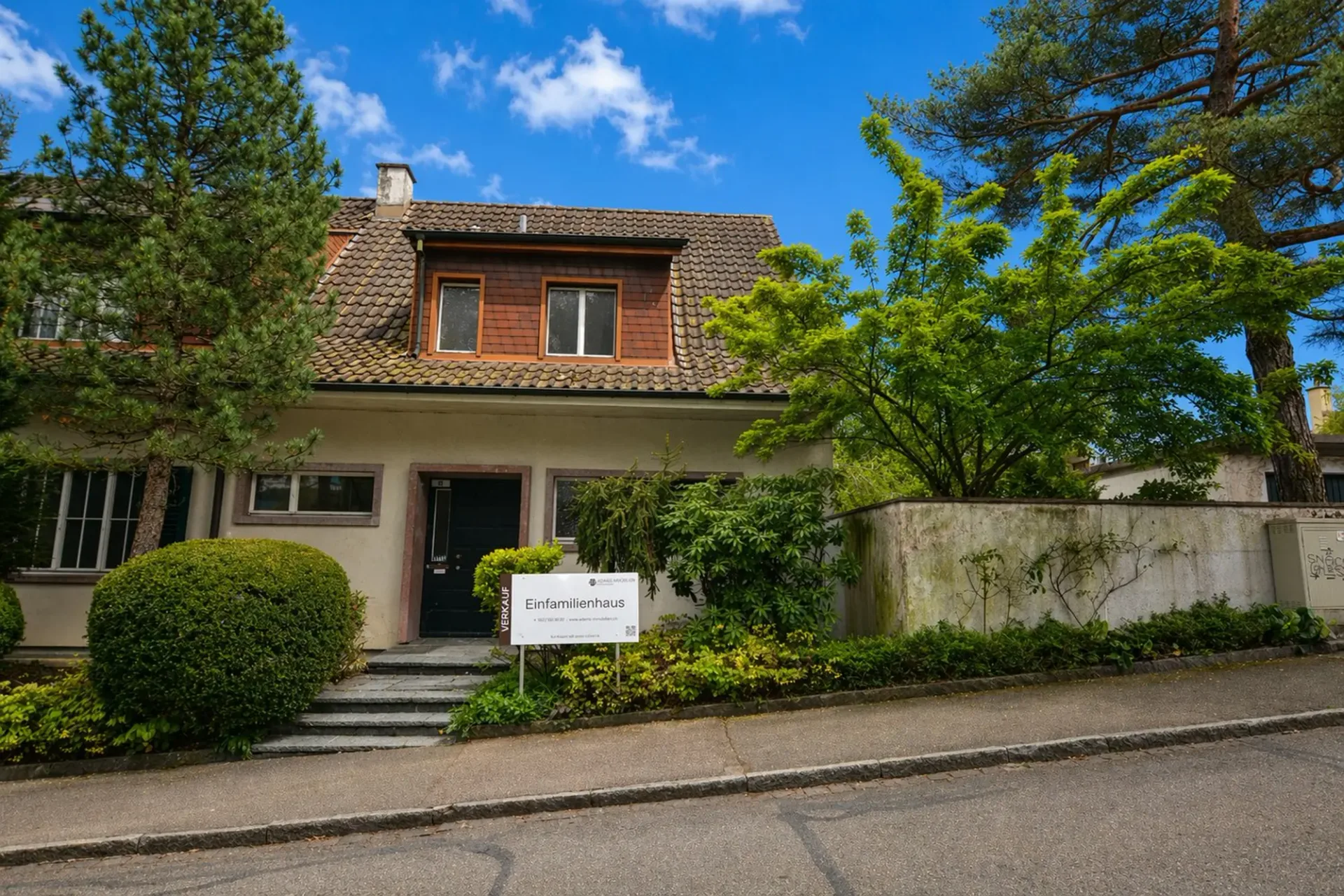
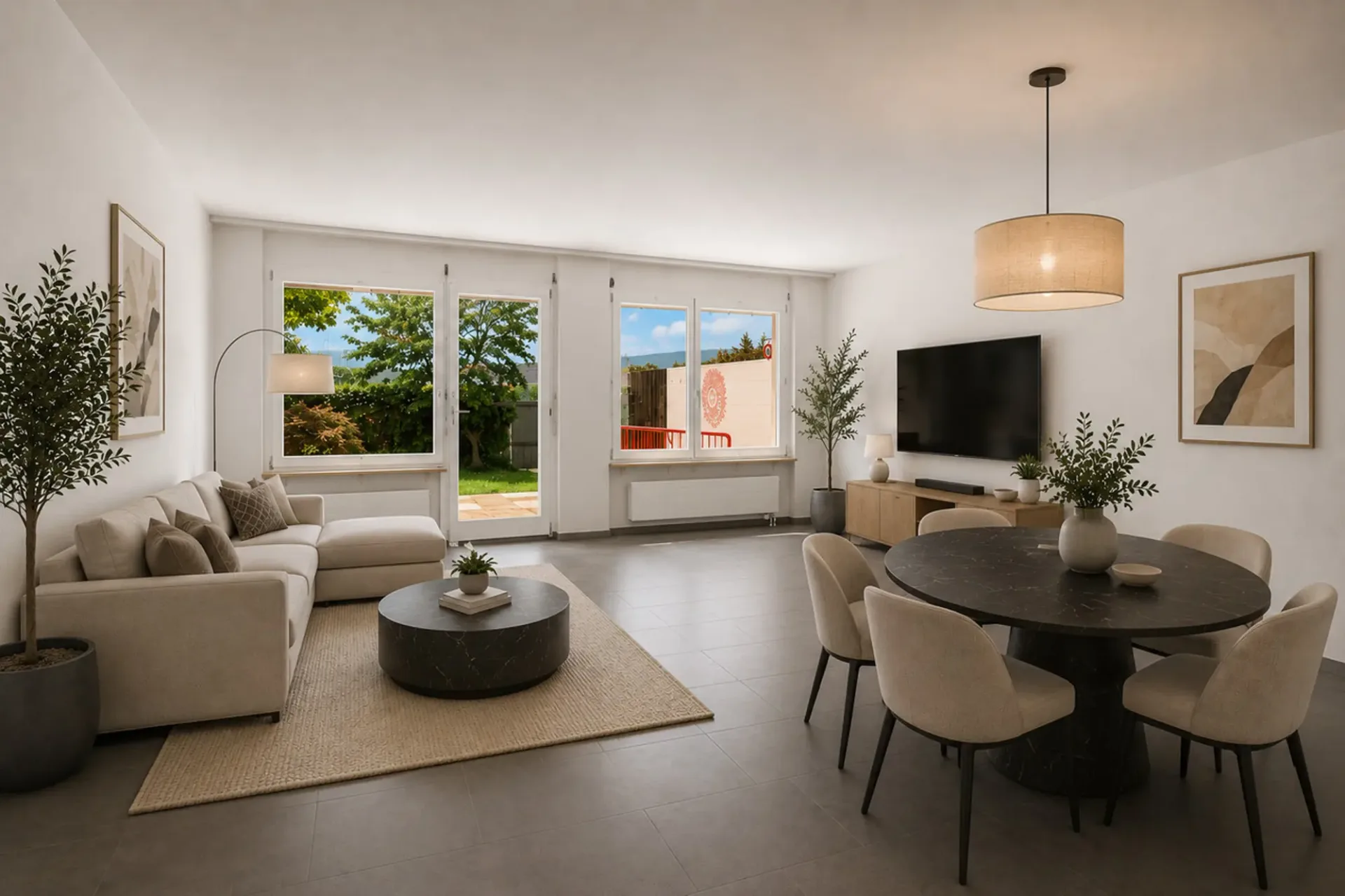
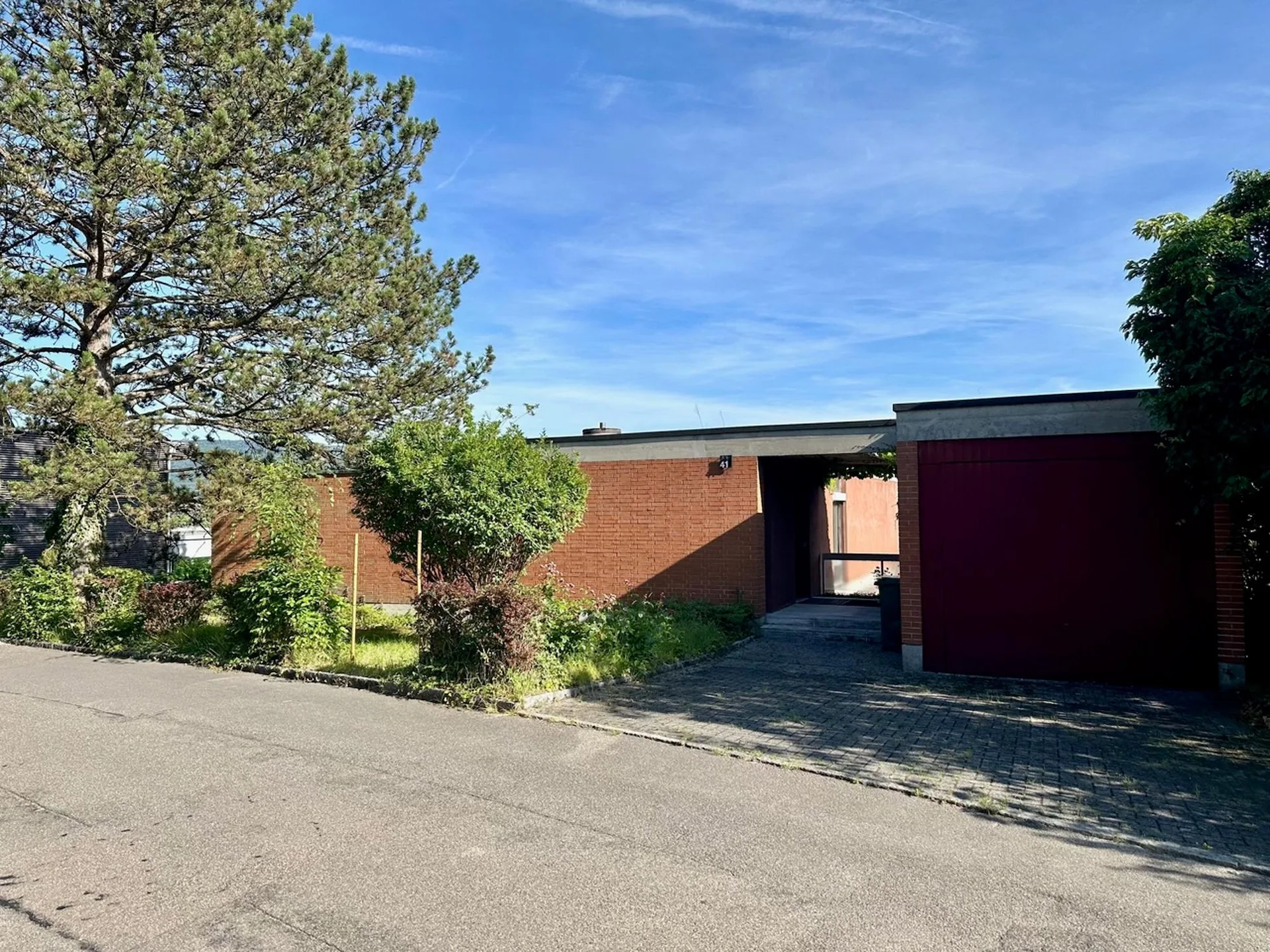
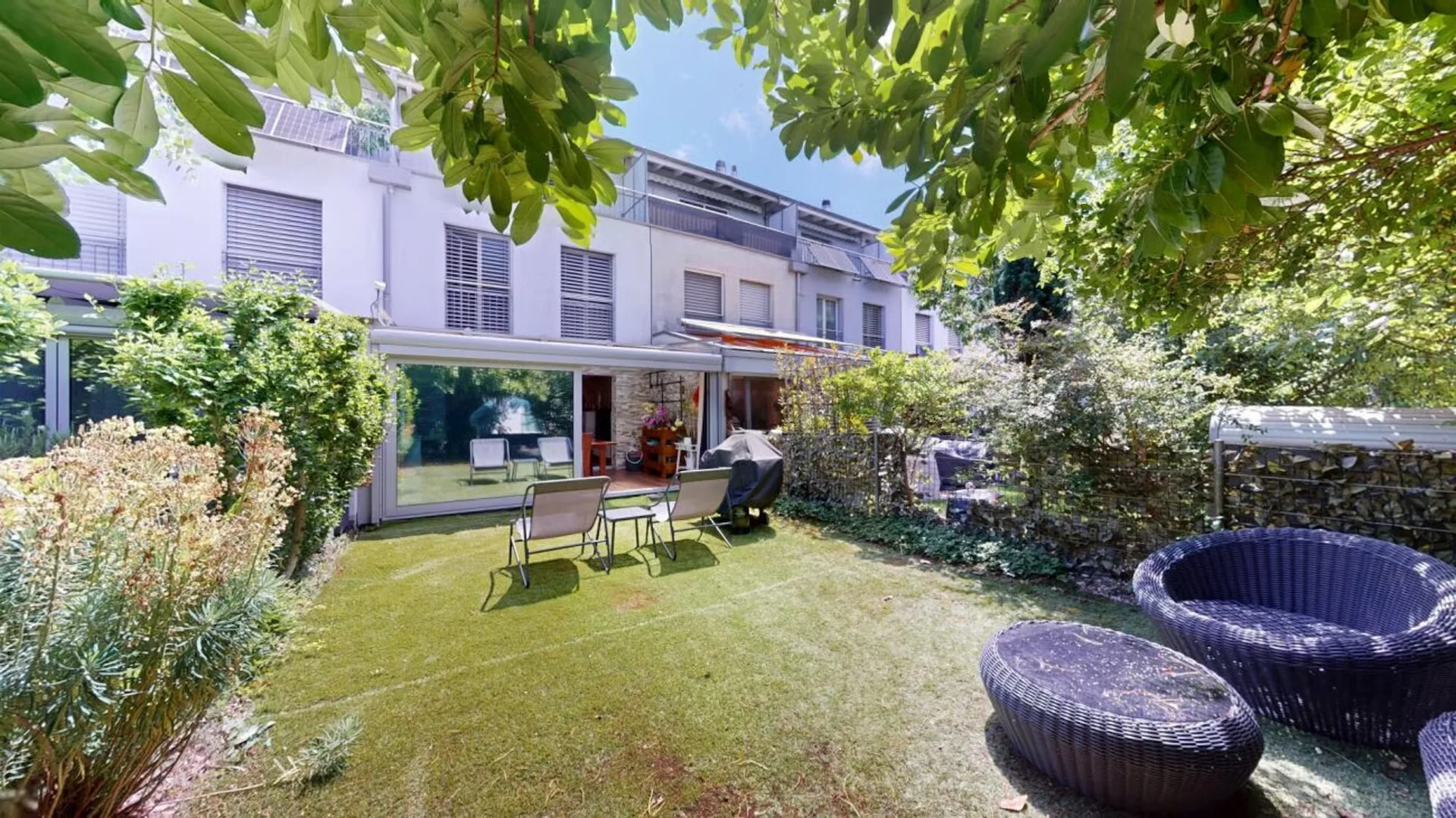
Reinach, settlement In den Gartenhöfen: Atrium house No. 5 for sale – the residential house of architect Ulrich LöwUlrich Löw designed the single-family house settlement In den Gartenhöfen together with his office partner Theodor Manz. The houses, built between 1959 and 1962, still offer arcadian qualities in 2025 – peace and serenity.House No. 5 – the original, soulful homeThe originally preserved residential house of the Löw family, part of the settlement carpet of 41 units, is pragmatically modern, harmonious, with an emphasis on privacy: a tidy, very Swiss equivalent of the swinging sixties. The unpretentious swing of this settlement has charm. Built optimism in a time when everything was going uphill.Quality of life on 112m2The Löws saw their three children grow up in house No. 5. The parents spent the rest of their lives in the Reinach home. In 2020, the father's work was sold by the children to the current owners.Inside and outThe central atrium is enclosed on two sides by the building, resulting in an L-shaped living floor plan. The large, grown-in garden is adjacent to the atrium. The individual single-story houses of the settlement are grouped in threes and connected to the other house groups through green spaces, paths, garage buildings, and a 'village square' with the settlement: a carpet that provides orientation in the diversely built environment. We enter a protected idyll near the Bruderholz forest, which 65 years after the start of construction still conveys joy in being at home.Historic landmark project, still current todayThe Atrium settlement in den Gartenhöfen was a pioneering project that, thanks to exemplary densification, still has significance today. The innovative overall structure with residential quality without an expiration date is a cantonally protected monument. The building quality has lasted, as has the landscape design. Wolf Hunziker was commissioned with the outdoor planting and the planting of individual residential gardens.Densified single-family house settlement, role modelsThe Søholm row houses by Arne Jacobsen and the Kingo houses by Jørn Utzon, both in Denmark, probably inspired architects Ulrich Löw and Theodor Manz to create the settlement In den Gartenhöfen.Harmonious openingThe fully covered entrance front is a geometric composition. Framed by red brick, it encloses the white wooden beam structure, seven window modules, the green-blue color field of the entrance door, and the yellow mailbox.Ideal homeWell-playable floor plan. Equipped with wall cabinets, wardrobe, kitchen and sanitary fittings: the house is ready to move in. The materials are simple and durable. The floors are laid with Solnhofen natural stone plates. Exception: the new linoleum coverings of the bedrooms, where the original material was also used.Atrium, oh AtriumThe atrium is the focus of the house: a protected, intimate outdoor area, enclosed on two sides, flooded with light. A massive rectangular concrete basin, in summer with blooming water lilies. Accessible from the living room, garden, and garage, from the large bedroom.The living and dining roomCozy room with plenty of light and harmony. Pass-through to the kitchen. Inclusion of the outdoor area through the wing door. Floor-to-ceiling window front, beautiful wooden frame construction. The deep flower window provides a view of the garden.GardenThe non-visible residential garden, designed by Ulrich Löw's brother Meinrad, landscape architect, is adjacent to the atrium. Various bird species, hedgehogs, and newts are the co-inhabitants. The beautiful, high brick garden wall has the door to the garage embedded in it.Exotic leisure activityUlrich Löw designed the compact orchid greenhouse for his own leisure hours. It is accessible from the garden as well as from the garage.Green viewThe house has three bedrooms. Or two plus an office. Each room with a view of the atrium and the garden.BathroomThe bathroom is also restored and preserved in its original state, including the washbasin, bathtub, fittings, bathroom furniture, hooks, and stone tiles. The guest toilet is located at the house entrance.KitchenThe kitchen with a pass-through to the dining area is also restored in an original manner and practical. The custom-made cabinets, all built-in units, are durable and have a good design. So does the large, handmade sink. Parallels to the Kingo kitchens by Jørn Utzon are not to be overlooked. All kitchen appliances have been replaced.Architecturally correct furnishingsLights by Arne Jacobsen, as well as the Loop garden chairs by Willy Guhl, still come from the Löw family household. The seating furniture by Charlotte Perriand and Le Corbusier, the two bookshelves LB7 by Franco Albini, are no longer in the house. The modernist functionality and space economy of these objects still fit the architecture and spirit today. The LB7, spanning from floor to ceiling, can still be found in antique shops and bring Italian formal language into play.LocationWith tram 11, you can reach the center of Basel in 15-20 minutes. The short walk offers further architectural entertainment: Ernst Gisel's brutalist church from the same year of construction (1960). Its hourly chime accompanies life in the Löw house. The virulent residential, educational, and commercial district of Dreispitz is a 10-minute walk away. The Reinach campus of the International School (grades 9-12) can be reached in 15 minutes on foot. Do you prefer shopping in nature? The nearby 40-hectare bio-pioneer operation Bruderholzhof, which is currently being converted to biodynamic agriculture and offers fine products, is your destination. In general, the Seiglermatten nature reserve is wonderful for long walks.Construction methodThe architects Löw & Manz developed the LOMA system for the settlement to create the raw building with few industrially manufactured components. The foundation, cellar walls, and ceiling slab to the living area are made of concrete and reinforced concrete elements. The flat-roof house is in good condition from a building physics point of view. The exterior walls above ground are made of facing brick, the interior walls of insulating brick. Stone wool plates provide insulation in the wall sandwich. The achieved K-value of 0.5 was very good at the time.HeatingThe completely overhauled oil central heating system runs efficiently. The heat distribution is carried out via the original, cast-iron radiators. Sustainability is planned: the conversion to a heat pump has been approved by the monument protection authority, and detailed plans are available.Room climateThe insulating ability and heat storage protect the occupants remarkably well from heat, while it is cozy and warm in the cold season.